
Music Production Guides / Ambient music
Before reaching for EQ, play the chord change dry. If the bass note is clear until the reverb comes back, you have found the right place to work. Listen to the two versions below and follow the old chord across the change.
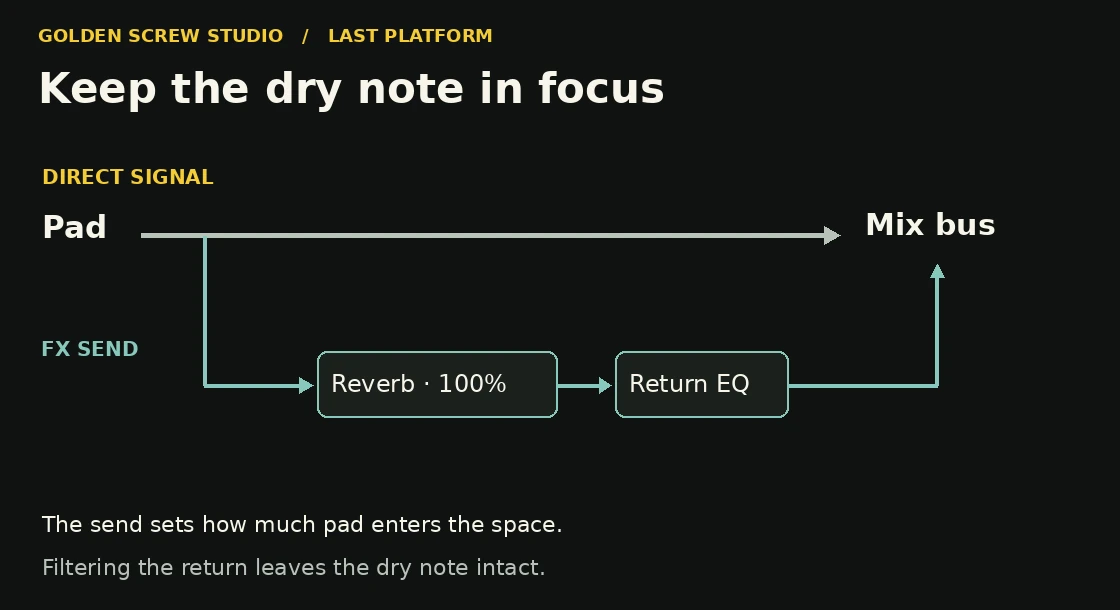
In A, the long return carries more low-mid energy through the change. For B, the return is turned down and high-passed around 240 Hz. The dry audio and the reverb decay stay the same. These settings exaggerate the difference so you can hear it. In your mix, test the send and the filter one at a time.
Is the mud coming from my notes or the room?
Loop two chords with the bass playing. Mute the reverb return. If they still blur, shorten the pad release, lift one low pad voice an octave, or leave a small gap before the new root. Restore the return only after you can sing the bass change. If bypassing the return fixes it immediately, leave the notes alone and work on the effect.
How do I set the send and decay?
Put a reverb at 100% wet on an aux or return. Start with the send all the way down. Raise it until you can place the pad behind your lead, then mute just the source and hear what remains. At the chord change, ask whether the tail of the old third creates an unwanted harmony with the new bass. Shorten the decay until the clash clears, or automate a smaller send on that chord.
At 72 BPM a quarter note lasts about 833 ms. A four-second decay spans almost five beats. That can work beautifully under a held drone and smear a chord that changes every two beats. Decay numbers describe the device’s envelope. Listen for how long the tail is actually audible in your mix.
How do I keep the melody close?
Try 20–40 ms of pre-delay on the return and listen to the first consonant-like edge of the pluck. Bring the setting back down if you hear a distinct second attack. You can also leave the pluck fairly dry and feed more of the supporting pad into the same space. Compare in mono at low volume.
Can I keep a very long tail?
Print the wet return to an audio track. Fade just the muddy overlap at the second chord, then allow the end of the phrase to ring. This works when the room is part of the story and shortening the whole decay makes the cue feel small.
To test a new source against this routing, mute the preset’s built-in reverb before sending it to the return. Audition the Serenity, DUNE and Horizon pads in the Super Ambient Bundle. Hear the complete ambient cue.